Hours, prices and access verified by the Airlie Beach Tours team — last checked 2026-09-21.
The best time to visit Airlie Beach is from June to October, when the rain
almost stops, the wind is lightest and the whales are passing. Summer is hot, green and wet,
and stingers can be in the sea in any month. Pick your season, then pick your
Airlie Beach Whitsundays tour.
Dry winter against wet summer
The Whitsundays have one wet season and one dry one, and the gap between them is wide. At
Proserpine Airport, the Bureau of Meteorology's long-running station nearest the town,
February brings 351.7 mm of rain and September 17.7 mm. That is about twenty times as
much.
Months
Rain at Proserpine
3pm wind, average
What changes for a tour
December–March
1,048 mm on about 41 days
22 km/h
The wet months: afternoon storms, the fewest clear days, the waterfall running
April–May
181 mm on about 14 days
21 km/h
Rain falling away and the humidity dropping; the first whales in May
June–August
88 mm on about 8 days
20 km/h
Dry and mild, cool nights on deck; whales, peaking in August
September–November
138 mm on about 11 days
23 km/h
The driest month, then warming; coral spawning from October
Rain rarely cancels a boat, but it changes your day. The white sand and the blue channels
off the islands need sun to show their colour. Proserpine averages 9.0 clear days in July and
August, and 1.5 in February. The full month-by-month figures are on
the weather page.
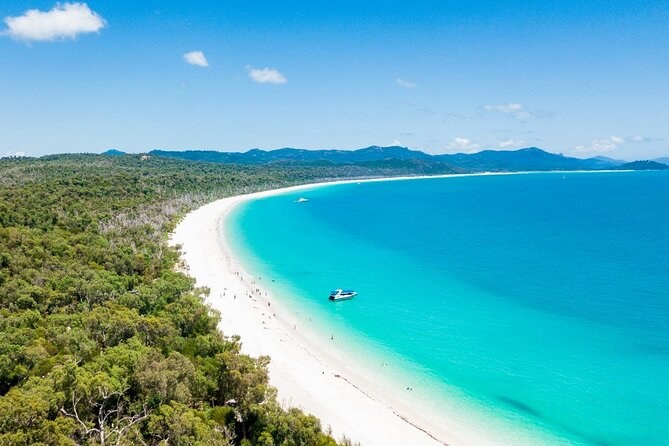
The long white curve of Whitehaven Beach seen from above the forest
Tourism Whitsundays is clear on one point: nothing on the classic Whitsundays list closes
for a season. Day tours, sails and island stays run all year, and only the weather around
them changes.
Whales from May, most in August
Which whales:
Humpback whales, migrating up the coast
When:
From around May to September, with numbers peaking in August, according to Tourism Whitsundays
How close:
Most waters round the islands sit inside the Whitsunday Whale Protection Area, where boats stay at least 300 metres clear
How you see them:
From the deck on the way out. The boat days are not sold as whale-watching trips, so a sighting is a bonus
Winter is the whale season and the dry season at once. A trip in July or August gives you
mild days, highs near 25 °C and a chance of whales on the crossing.
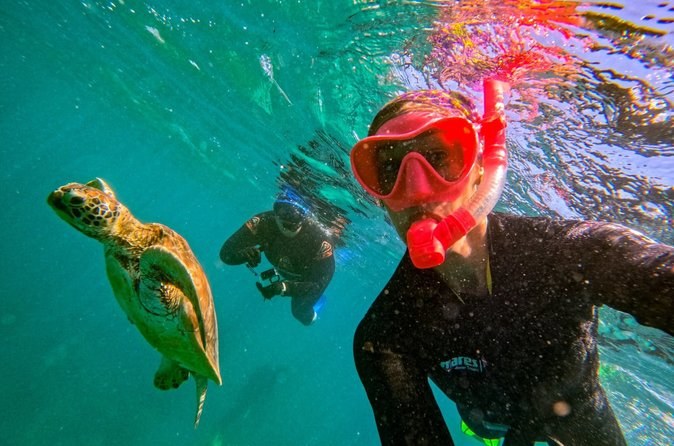
Stingers: any month, highest risk October to May
There is no month to swim in the sea without a
suit. Marine stingers, including the tiny Irukandji, can be in tropical Queensland
waters in any month, and the higher-risk window runs from October to May. Many boats put a
stinger suit or a wetsuit in the fare; check yours on
what to expect before you go.
Queensland Parks and Wildlife Service goes further: it says dangerous stingers, sharks and
crocodiles can be in the sea at all times of the year. If you are stung, leave the water,
pour vinegar on the sting and get medical help at once.
In town, the lagoon is your stinger-free swim. The Airlie Beach Lagoon is chlorinated,
patrolled by lifeguards and free in every month of the year.
The calmest weeks for time on the water
September has the most settled skies and the lightest average winds of the year at
Hamilton Island, Tourism Whitsundays says, with August close behind. That makes early spring
the season for being out on the water: snorkelling, sailing and the jet ski all get easier
without the chop.
The difference is smaller on the mainland. At Proserpine, the average 3pm wind runs from
19.7 km/h in June to 23.1 km/h in March and October. Your day's forecast matters more than
the month, and a windy day makes a raft ride wetter and a sail faster.
Know your month?
Compare the tours by where the day goes, whether you snorkel, and how late you can cancel.
Queensland school holidays drive the busy weeks, and August books out earliest of all.
Tourism Whitsundays lists the peaks:
About six weeks from mid-December, the summer school holidays.
About two and a half weeks around Easter.
About two and a half weeks from late June, the winter holidays.
About two and a half weeks from mid-September into early October.
August, when the Great Barrier Reef Festival and both race weeks fall
back to back from late July, taking rooms, boats and tours with them.
February, March and October sit outside both the school holidays and the winter events,
so they are the easiest months to find space. Ocean Rafting also adds a surcharge on
Queensland public holidays: $20 per adult, $10 per child and $50 per family.
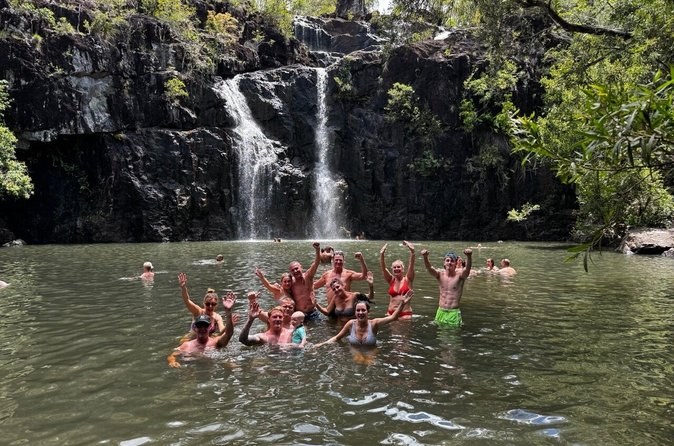
When Cedar Creek Falls runs
Cedar Creek Falls is a free rock pool in the hinterland, about 30 minutes by road, and its
waterfall follows the rain. Tourism Whitsundays says the flow is strongest after wet weather
and may slow to a trickle or stop in dry periods.
That puts the best of it in the wet months, from December to March. The Cedar Creek bus
warns that from August to October the waterfall may not be running, though the waterhole is
there all year. If the falls are the point of your trip, go after rain.
Coral spawning
What:
The corals of the fringing reefs release their spawn
When:
It follows the October to December full moons, according to Tourism Whitsundays
Water:
About 22–23 °C in midwinter and about 29 °C in late summer, on Tourism Whitsundays' figures
The timing is the reef's own, and no boat day is scheduled around it. What spring gives
you for certain is warmer water, on the way up from the midwinter low.
Sunset and the time of day
Most full boat days leave between 7:30am and 10am and return in the late afternoon, so you
choose the day, not the hour. The sunset sail is the evening option: it leaves at 4:30pm and
sails Pioneer Bay while the sun goes down over the hills.
On land, Tourism Whitsundays suggests the Bicentennial Walkway early in the morning or at
sunset, when it is cooler.
Questions about timing
What is the best month to visit Airlie Beach?
It depends on what you want from the water. September is the driest month at Proserpine, with 17.7 mm of rain, and Tourism Whitsundays calls it the calmest month for time on the water. August brings the most whales.
When is the wet season in Airlie Beach?
From about December to March. February is the wettest month at Proserpine, with 351.7 mm of rain on about 12 days, and the rain tends to come as an afternoon burst rather than all day.
When is stinger season in Airlie Beach?
Marine stingers can be in the water in any month, and the higher-risk window runs from October to May, according to Tourism Whitsundays. Wear a stinger suit whenever you swim in the sea.
When can you see whales?
From about May to September, with numbers peaking in August, according to Tourism Whitsundays. Boats keep at least 300 metres clear inside the Whitsunday Whale Protection Area.
Is Airlie Beach cold in winter?
Not by day. July averages highs of 24.5 °C at Proserpine, but lows of 11.3 °C, so bring a warm layer for early starts and evenings on deck.
When is Cedar Creek Falls running?
After rain. Tourism Whitsundays says the flow depends on recent rainfall and can stop in dry periods. The Cedar Creek bus warns the waterfall may not run from August to October, though the waterhole is there all year.
Where these facts come from
Rain, temperature, clear days and wind are the Bureau of Meteorology's climate statistics
for Proserpine Airport (033247) and Hamilton Island Airport (033106), checked 21 September 2026. Whales,
stingers, spawning, the school holidays and the falls are Tourism Whitsundays' own; the
all-year stinger warning is Queensland Parks and Wildlife Service's. Departure times and the
surcharge are the operators'.
Eight hours on an air-conditioned catamaran to the southern end of the beach, with up to four hours on the sand on the beach-only ticket and a guided walk to the southern lookout. No stop at the inlet.
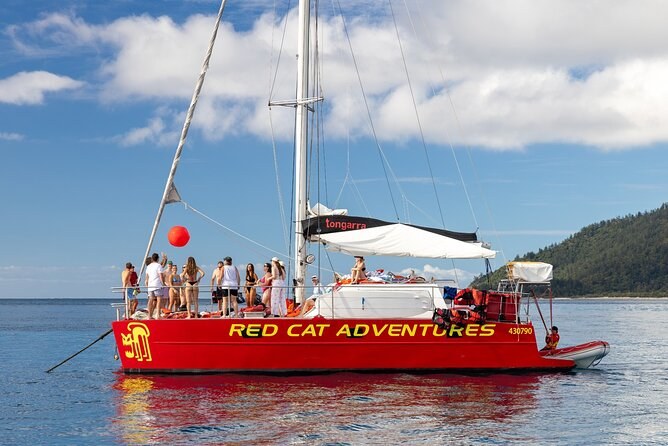
Eight and a half hours on a sailing catamaran to a fringing reef, a short lookout walk and a sandbar, back at sunset. Snorkel gear and a stinger suit are in the fare; ages 12 and over, and the drinks are yours to bring.
Three hours out to the rainforest swimming hole and back, with about an hour and 40 minutes at the water. Water shoes, pool noodles, banana bread and coffee are in the fare, with an eco-certified guide.